
Select your store: 2300 S. 6th Ave, Tucson

Online orders are in store pickup only.

0 $0.00
items in your cartto quote To cart
Ooops no items were found.
Try something else.
Ok
Loading…

Butcher Block Countertops: The Complete Guide

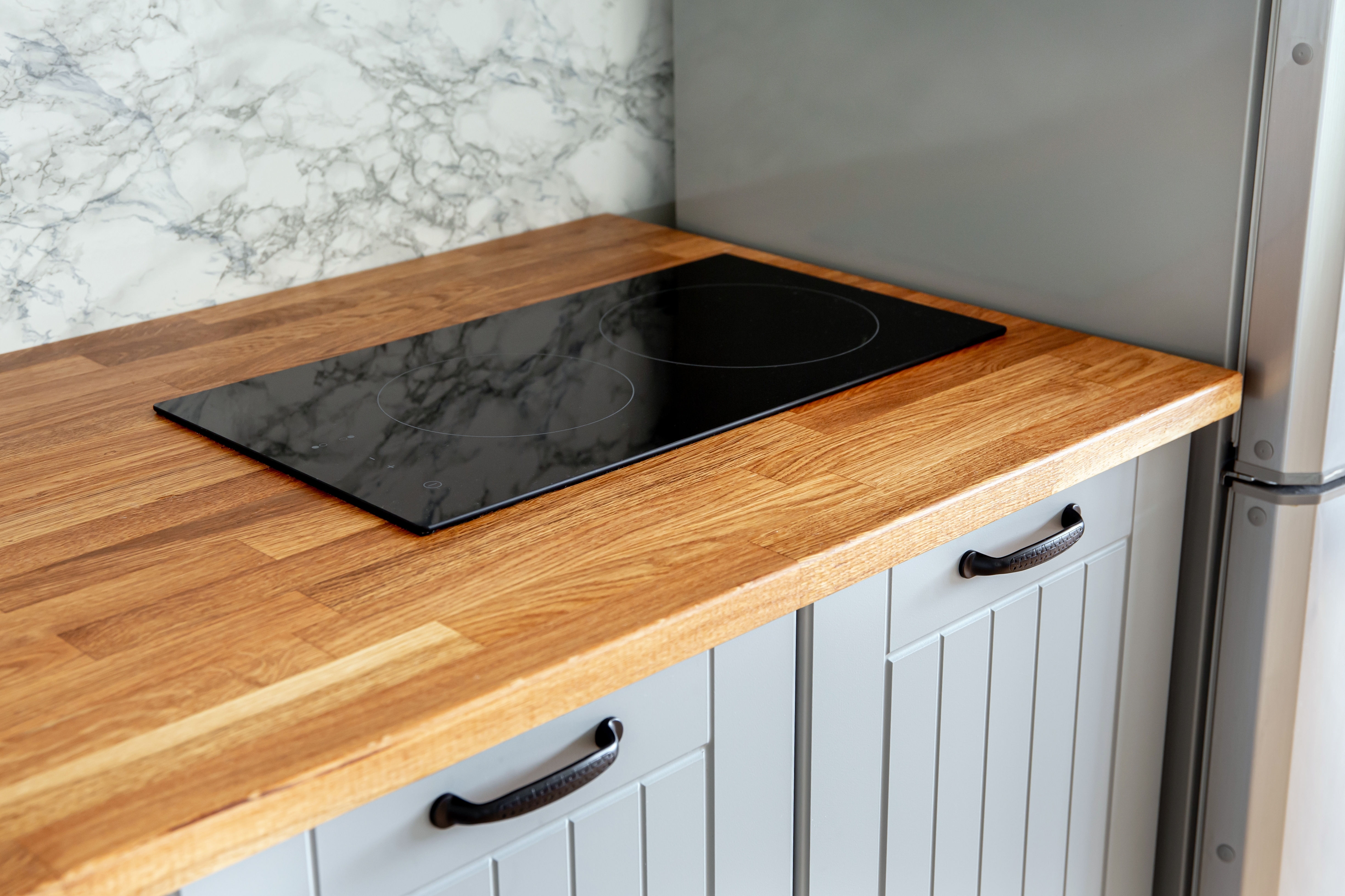
Butcher block wood countertop with a black glass cooktop in a modern kitchen with gray cabinets and marble backsplash. Butcher block wood countertop with a black glass cooktop in a modern kitchen with gray cabinets and marble backsplash.

Butcher block countertops are made from joined pieces of wood and offer a warm, natural surface for kitchens, islands and food preparation areas. They can be an attractive alternative to stone countertops, but choosing the right wood species, applying the appropriate finish and maintaining consistent indoor conditions are essential, especially in hot, dry climates where wood can lose moisture and shrink.

The Window Depot stocks butcher block, granite and quartz countertops at its stores in Tucson, Phoenix, Chandler, Surprise, El Paso, Albuquerque and National City. In dry desert markets, butcher block countertops require particular attention to humidity, direct sunlight and routine care. Wood responds to changes in its surrounding environment, so a countertop that performs well in one home may need different maintenance in another.

What Are Butcher Block Countertops?

Butcher block countertops are wood surfaces constructed by joining multiple pieces of lumber into a larger panel. The pieces may be arranged in different orientations, creating distinct grain patterns, appearances and performance characteristics.

Although the term originally refers to heavy-duty wood blocks used for cutting and food preparation, modern butcher block countertops are also selected for kitchen design. They can introduce natural texture into a room and complement cabinetry, flooring and other finishes.

How are butcher block countertops constructed?

The construction method influences the countertop's appearance, cost, stability and intended use. Three common arrangements are edge grain, face grain and end grain.

What is an edge-grain butcher block countertop?

Edge-grain construction places narrow boards on their edges so that the long grain of the wood forms the primary visible surface.

This arrangement produces a linear pattern that works well in traditional and contemporary kitchens. It is commonly used for countertops and islands because it creates a relatively uniform appearance.

What is a face-grain butcher block countertop?

Face-grain construction displays the broad face of the wood boards. This reveals more of the wood's natural grain pattern, including variations in color and figure.

Face-grain countertops can create a furniture-like appearance and work particularly well when the wood is intended to be a prominent design feature.

However, the visible grain and the finish should be considered carefully. Scratches, dents and wear may be more noticeable depending on the species, lighting and surface treatment.

What is an end-grain butcher block countertop?

End-grain construction positions the ends of short wood blocks upward, exposing the ends of the wood fibers.

This creates a distinctive checkerboard or block pattern. End-grain surfaces are traditionally associated with cutting blocks because the exposed fiber arrangement can be suitable for certain cutting applications.

End-grain construction may require more involved manufacturing and maintenance. It should not automatically be assumed to be waterproof or maintenance-free. The finish and the manufacturer's instructions determine how the surface should be cleaned and cared for.

Which Wood Species Are Best for Butcher Block Countertops?

The wood species affects color, grain, hardness, appearance and how easily the surface may show dents or scratches. It can also influence cost and the maintenance needed to preserve the finish.

No single species is best for every kitchen. Consider the appearance you want, how heavily the countertop will be used and whether you are comfortable maintaining a natural wood surface.

Is maple a good choice for butcher block countertops?

Maple is a popular option for butcher block because it generally has a light color and a relatively subtle grain pattern.

Hard maple is commonly selected for work surfaces because of its hardness and wear characteristics. Its understated appearance also works well in kitchens where the countertop should complement rather than dominate the cabinetry.

Maple still needs appropriate protection from moisture and spills. Its light color can also make some stains or discoloration easier to notice.

Are walnut butcher block countertops worth considering?

Walnut is valued for its rich brown tones and distinctive natural grain. It can add contrast to lighter cabinets or complement darker, warmer kitchen finishes.

Compared with lighter species, walnut can create a more dramatic visual feature. Its appearance makes it a popular consideration for kitchen islands and other areas where the countertop is intended to stand out.

Is oak suitable for butcher block countertops?

Oak is known for its prominent grain and distinctive texture. Depending on the variety and cut, it can have a more pronounced pattern than maple.

Oak can complement rustic, traditional and transitional kitchen designs. Its appearance may also work well in spaces with wood cabinetry or natural finishes.

When evaluating oak, consider how its open grain, color and texture will coordinate with the rest of the room. The species alone does not determine resistance to water damage or staining. The finish and countertop construction are also important.

What about cherry butcher block countertops?

Cherry is known for its warm reddish-brown appearance and changing color as it ages and is exposed to light.

It can suit kitchens where a rich, natural wood tone is desired. Its grain is generally more understated than some oak varieties, making it an option for homeowners who want warmth without a highly pronounced grain pattern.

Before choosing cherry, consider whether you are comfortable with the wood's natural color changes over time. Direct sunlight can also affect the appearance of wood finishes, so window placement and daylight exposure may matter.

Is birch a good alternative?

Birch is another light-colored wood used in countertop construction. It can provide a clean, relatively subtle grain pattern that fits many kitchen designs.

Its appearance may appeal to homeowners who want a bright surface without the pronounced grain of some other species. However, the exact characteristics depend on the birch variety and the product's construction.

Do Butcher Block Countertops Need to Be Sealed?

Yes. Butcher block countertops need a suitable protective finish to help manage moisture, stains and everyday wear. The type of finish should be selected according to the countertop's intended use and the manufacturer's care instructions.

Wood is naturally vulnerable to moisture changes. A protective finish can slow moisture exchange and make cleaning easier, but it does not make the wood completely waterproof or eliminate expansion and contraction.

What is the difference between sealing and oiling?

The terms are sometimes used interchangeably, but they can describe different approaches to protecting wood.

Sealing generally refers to applying a finish that forms a protective layer or otherwise limits moisture penetration. Depending on the product, the finish may create a film on the surface or penetrate into the wood.

Oiling generally refers to applying a suitable oil that penetrates or conditions the wood. Some oils provide a relatively natural-looking finish, but they may require periodic reapplication.

The distinction matters because the maintenance procedures are not the same. A film-forming finish may need repair or refinishing when damaged, while an oil-finished countertop may require regular re-oiling according to the product instructions.

Which finish is best for food preparation?

If you intend to prepare food directly on the countertop, use a finish specifically approved for that intended contact and follow the manufacturer's instructions.

A product described as natural or plant-based is not automatically suitable for every food-contact application. Likewise, a finish suitable for furniture may not be appropriate for a surface used to prepare food.

Before purchasing a countertop, ask the supplier:

  • Is the finish suitable for the intended food-preparation use?
  • Can food be placed directly on the surface?
  • Is the surface intended for cutting, or should a cutting board always be used?
  • How should the finish be cleaned and renewed?
  • How long must the finish cure before the surface is used?

If you plan to cut directly on the wood, confirm that the countertop and finish are specifically appropriate for that purpose. Using a separate cutting board helps protect the surface and simplifies routine care.

How Often Should You Oil Butcher Block Countertops?

There is no universal oiling schedule for every butcher block countertop. The frequency depends on the species, finish, usage, indoor environment and manufacturer's recommendations.

A countertop that receives frequent washing or heavy food-preparation use may need attention sooner than a lightly used decorative surface.

What are the signs that a countertop needs maintenance?

Look for changes such as:

  • A surface that appears unusually dry or dull.
  • Areas where the finish has worn away.
  • Water that no longer behaves as expected on the finished surface.
  • Rough patches or small areas of exposed wood.
  • Visible changes around heavily used preparation areas.

These signs do not automatically mean the countertop needs more oil. A film-forming finish, for example, may require a different repair procedure.

Identify the existing finish before applying a maintenance product. Using an incompatible oil, cleaner or coating can cause adhesion problems, discoloration or an uneven appearance.

How should you maintain an oil-finished countertop?

For a countertop designed to receive oil, clean and dry the surface, apply a thin coat of the recommended oil, wipe off the excess and let it cure fully before using the counter again. More oil isn't more protection, since excess product can leave a sticky, uneven surface.

Some drying oils can generate heat as they cure. Follow the product's safety instructions for disposing of oil-soaked cloths and other materials.

How should you clean butcher block countertops?

Routine cleaning should remove food residue without saturating the wood.

Use a soft cloth and a cleaning method compatible with the finish. Wipe up spills promptly, especially around sinks, faucets and other areas where water may remain on the surface.

Avoid leaving wet cloths, standing water or damp items on the countertop for long periods. Do not use aggressive cleaners, abrasive pads or disinfectants unless the finish manufacturer confirms they are appropriate.

If the countertop is intended for direct food preparation, follow food-safety guidance for cleaning and sanitizing the specific surface. A finish's suitability for food contact does not automatically mean every cleaning chemical is appropriate.

How Does Dry Desert Air Affect Butcher Block Countertops?

Dry air is an important consideration for wood countertops in desert climates. Wood exchanges moisture with the surrounding environment, and prolonged exposure to lower humidity can cause the wood's moisture content to decrease.

As wood loses moisture, it can shrink. Depending on the construction, grain orientation and amount of moisture change, this movement may contribute to gaps, checking, cracks or changes around joints.

The U.S. Forest Service’s Wood Handbook explains that wood absorbs and releases moisture as surrounding humidity and temperature change. Its 2021 technical guidance uses a 6% to 14% moisture-content range to estimate dimensional changes in wood under certain conditions. For butcher block countertops, this illustrates why stable indoor conditions, proper installation, and suitable protective finishes matter. The range is used for specific engineering calculations and is not a universal moisture target for every countertop.

What problems can dry air cause?

In a dry climate, homeowners may notice:

  • Small gaps appearing between wood pieces or at joints.
  • Fine surface checks or cracks.
  • Changes in the fit around walls, backsplashes or adjoining materials.
  • Movement around cutouts for sinks and other fixtures.
  • Changes in the appearance or condition of the finish.

These symptoms can have several causes, and not every gap indicates a serious problem. However, sudden or significant changes should be evaluated before repairs are attempted.

Can air conditioning affect butcher block countertops?

Yes. Air conditioning changes indoor temperature and often affects indoor relative humidity. In a dry climate, a consistently conditioned home can expose wood to a different moisture environment from the one it experienced during storage or installation.

This is one reason wood countertops should be allowed to acclimate according to the manufacturer's requirements before installation. The countertop should also be installed with the appropriate allowances for movement.

A wood countertop should not be rigidly constrained in a way that prevents its natural dimensional changes. Installation details depend on the product and cabinetry, so a qualified countertop professional should follow the manufacturer's instructions.

How can you protect butcher block countertops in a desert climate?

You cannot eliminate wood's natural response to humidity, but you can reduce avoidable stress.

Maintain reasonably stable indoor conditions. Avoid large, unnecessary swings in temperature and humidity. In Arizona, El Paso and Albuquerque, the shift from very dry spring air to humid monsoon weather is one of the bigger seasonal swings wood will see. If the home uses humidification, follow professional guidance and avoid excessive moisture that could cause other building problems.

Choose a suitable wood countertop. Compare the construction method, species, finish and manufacturer's recommendations for the expected indoor environment.

Allow proper acclimation. The countertop should be stored and acclimated as directed before installation so that the material is not installed under unsuitable conditions.

Use an appropriate finish. A suitable finish can slow moisture exchange, although it cannot stop wood from responding to changes in its environment.

Keep water exposure under control. Wipe up spills, avoid leaving wet items on the surface and pay attention to sink cutouts and other vulnerable areas.

Watch for changes. Check the countertop periodically for gaps, cracking, finish wear or movement around fixtures.

Should you install butcher block near a sink in a dry climate?

It is possible, but the area around a sink requires extra attention because it experiences repeated water exposure.

The countertop should have a finish appropriate for the intended use, and the installation should protect exposed edges and cutouts according to the manufacturer's instructions.

Even with a suitable finish, standing water can damage wood over time. If your household frequently leaves water around the sink, a less moisture-sensitive material may be easier to maintain in that location. Our guide to kitchen sink types covers which sink styles pair best with wood countertops.

Does direct sunlight affect wood countertops?

Direct sunlight can heat the countertop surface and gradually affect the color of some wood species and finishes. Uneven sunlight exposure can also make color changes more noticeable over time.

If the countertop is installed beside a large window or in a sunny breakfast area, consider how much direct light reaches the surface throughout the day.

Window coverings or other shading may help limit intense exposure. If you are also choosing windows for a hot climate, consider the glass's solar performance and how the room's sunlight affects indoor comfort.

Butcher Block vs. Granite vs. Quartz: Which Countertop Is Better?

Butcher block, granite and quartz offer different combinations of appearance, durability and maintenance. The best option depends on how you use your kitchen, what aesthetic you prefer and how much routine care you are willing to perform.

The Window Depot's existing guide, The Complete Guide to Granite & Quartz Countertops, provides additional context for comparing the two stone options.

How does butcher block compare with granite?

Granite is a natural stone that provides a distinctive pattern and a hard surface. Butcher block provides the natural grain and warmer appearance of wood.

Granite still requires appropriate care. Some granite surfaces need periodic sealing, and the performance of the stone depends on its characteristics and finish. Do not assume every granite countertop has identical stain resistance.

How does butcher block compare with quartz?

Quartz countertops are typically engineered from mineral material and resin. They offer a range of colors and patterns, including options that resemble natural stone.

Butcher block looks and feels different. Its grain variation provides a natural appearance, but it also responds to moisture changes and may show dents, scratches or wear.

Quartz should not be treated as indestructible. Follow the manufacturer's instructions for hot cookware, cleaning chemicals and stain removal. Resin-containing engineered surfaces can be affected by excessive heat, so trivets and other protective measures may still be necessary.

Which countertop material is easiest to maintain?

Maintenance depends on the product and how it is used.

Feature

Butcher block

Granite

Quartz

Main material

Wood

Natural stone

Engineered mineral and resin material

Appearance

Warm grain and natural variation

Unique stone patterns

Broad range of engineered colors and patterns

Routine care

Prompt spill cleanup and finish-specific maintenance

Stone-appropriate cleaning and possible sealing

Manufacturer-approved cleaning

Moisture considerations

Wood can absorb moisture and change dimension

Depends on stone and finish; some varieties need sealing

Generally low absorption, but edges and seams still need care

Scratch and dent behavior

Can show dents, cuts and wear

Hard surface, but may chip or scratch under certain conditions

Hard surface, but can chip or be damaged

Heat considerations

Protect from hot cookware

Generally heat resistant, but avoid sudden temperature shocks

Protect from excessive heat according to manufacturer instructions

Repair approach

Some surfaces can be sanded and refinished

Repairs may require a stone professional

Repairs can be more difficult to make invisible

Best fit

Warm design, islands and selected work areas

Natural stone appearance and hard working surface

Consistent design and lower wood-specific maintenance

This comparison is general. Exact performance varies by product, installation, finish and care routine.

Can you combine butcher block with granite or quartz?

Yes. Combining countertop materials can provide both visual contrast and practical flexibility.

For example, a kitchen may use granite or quartz on the main work surfaces and butcher block on an island or breakfast bar. This can introduce the warmth of wood without making every countertop area dependent on the same maintenance routine.

A mixed-material design can also define different zones within the kitchen. However, the materials must be coordinated carefully because wood moves with moisture changes while stone and engineered surfaces have different dimensional and installation requirements.

Discuss transitions, support, clearances and attachment methods with a qualified countertop professional.

What Should You Know Before Buying Butcher Block Countertops?

A countertop's appearance is important, but the product specifications determine whether it suits your needs.

Check the countertop's dimensions and installation requirements

Wood countertops need appropriate support and allowance for natural movement. The manufacturer should provide instructions for attachment, clearances and how the countertop should meet walls, cabinets, sinks and other materials.

A qualified professional can help ensure that the installation accommodates the wood's expected movement. Contractors should leave expansion gaps at walls and use slotted fastener holes where the manufacturer calls for them, so the top can move without splitting.

Compare the total cost of ownership

The initial purchase price is only one part of the decision. Consider the countertop, fabrication, installation, finishing products and maintenance over time.

Prices vary by species, thickness, construction, dimensions, edge profile and local labor. Obtain product-specific quotes rather than relying on a single general price estimate.

Frequently Asked Questions About Butcher Block Countertops

Are butcher block countertops durable?

They can be durable when the wood, construction and finish are suitable for the intended use. However, wood can show scratches, dents, stains and moisture-related movement. Regular care is part of owning a wood countertop.

Do butcher block countertops need to be oiled regularly?

Some do. Oil-finished countertops may need periodic reapplication, while film-forming finishes require different care. Follow the countertop and finish manufacturer's instructions rather than using a fixed schedule for every product.

Can butcher block countertops crack in dry climates?

They can develop cracks, checks or gaps if moisture changes cause the wood to shrink, particularly when installation or environmental conditions contribute to stress. Proper acclimation, installation and indoor conditions can help reduce avoidable problems.

Is butcher block better than granite or quartz?

There is no universal winner. Butcher block offers a natural wood appearance and may be repairable through refinishing. Granite offers a natural stone surface, while quartz provides engineered colors and patterns. The best choice depends on use, appearance and maintenance preferences.

Can I put hot pans on butcher block countertops?

Use trivets or heat-resistant pads unless the manufacturer specifically confirms that the surface can tolerate the intended exposure. Hot cookware can damage finishes, discolor wood or leave marks.

Are butcher block countertops safe for food preparation?

They can be appropriate when the countertop and finish are designed for the intended food-contact use and are maintained correctly. Confirm the manufacturer's guidance for direct cutting, cleaning and sanitizing.

How do I protect butcher block countertops near a sink?

Use an appropriate finish, follow the installation requirements for exposed edges and cutouts, wipe up standing water promptly and inspect the surface for wear. Wood near a sink requires particular attention because repeated moisture exposure can damage the finish and underlying material.

Final Thoughts: Are Butcher Block Countertops the Right Choice?

Butcher block brings natural warmth to a kitchen, but it asks more of you than stone does. In a dry desert home, choosing a compatible finish and keeping indoor conditions steady make the biggest difference, and an island or breakfast bar is often the easiest place to start.

The main consideration is maintenance. Wood responds to humidity, temperature and moisture exposure, which makes finish selection and routine care especially important in hot, dry regions. Homeowners should also consider how the countertop will be used, particularly around sinks, cooking areas and windows that receive direct sunlight.

Before making a decision, compare the material's specifications, ask about finish requirements and consider how the countertop will fit your everyday routine. Visit The Window Depot in Tucson, Phoenix, Chandler, Surprise, El Paso, Albuquerque or National City, or find a nearby The Window Depot location to explore your options and discuss your kitchen project.


Butcher Block Countertops: The Complete Guide

Butcher block wood countertop with a black glass cooktop in a modern kitchen with gray cabinets and marble backsplash. Butcher block wood countertop with a black glass cooktop in a modern kitchen with gray cabinets and marble backsplash.

Butcher block countertops are made from joined pieces of wood and offer a warm, natural surface for kitchens, islands and food preparation areas. They can be an attractive alternative to stone countertops, but choosing the right wood species, applying the appropriate finish and maintaining consistent indoor conditions are essential, especially in hot, dry climates where wood can lose moisture and shrink.

The Window Depot stocks butcher block, granite and quartz countertops at its stores in Tucson, Phoenix, Chandler, Surprise, El Paso, Albuquerque and National City. In dry desert markets, butcher block countertops require particular attention to humidity, direct sunlight and routine care. Wood responds to changes in its surrounding environment, so a countertop that performs well in one home may need different maintenance in another.

What Are Butcher Block Countertops?

Butcher block countertops are wood surfaces constructed by joining multiple pieces of lumber into a larger panel. The pieces may be arranged in different orientations, creating distinct grain patterns, appearances and performance characteristics.

Although the term originally refers to heavy-duty wood blocks used for cutting and food preparation, modern butcher block countertops are also selected for kitchen design. They can introduce natural texture into a room and complement cabinetry, flooring and other finishes.

How are butcher block countertops constructed?

The construction method influences the countertop's appearance, cost, stability and intended use. Three common arrangements are edge grain, face grain and end grain.

What is an edge-grain butcher block countertop?

Edge-grain construction places narrow boards on their edges so that the long grain of the wood forms the primary visible surface.

This arrangement produces a linear pattern that works well in traditional and contemporary kitchens. It is commonly used for countertops and islands because it creates a relatively uniform appearance.

What is a face-grain butcher block countertop?

Face-grain construction displays the broad face of the wood boards. This reveals more of the wood's natural grain pattern, including variations in color and figure.

Face-grain countertops can create a furniture-like appearance and work particularly well when the wood is intended to be a prominent design feature.

However, the visible grain and the finish should be considered carefully. Scratches, dents and wear may be more noticeable depending on the species, lighting and surface treatment.

What is an end-grain butcher block countertop?

End-grain construction positions the ends of short wood blocks upward, exposing the ends of the wood fibers.

This creates a distinctive checkerboard or block pattern. End-grain surfaces are traditionally associated with cutting blocks because the exposed fiber arrangement can be suitable for certain cutting applications.

End-grain construction may require more involved manufacturing and maintenance. It should not automatically be assumed to be waterproof or maintenance-free. The finish and the manufacturer's instructions determine how the surface should be cleaned and cared for.

Which Wood Species Are Best for Butcher Block Countertops?

The wood species affects color, grain, hardness, appearance and how easily the surface may show dents or scratches. It can also influence cost and the maintenance needed to preserve the finish.

No single species is best for every kitchen. Consider the appearance you want, how heavily the countertop will be used and whether you are comfortable maintaining a natural wood surface.

Is maple a good choice for butcher block countertops?

Maple is a popular option for butcher block because it generally has a light color and a relatively subtle grain pattern.

Hard maple is commonly selected for work surfaces because of its hardness and wear characteristics. Its understated appearance also works well in kitchens where the countertop should complement rather than dominate the cabinetry.

Maple still needs appropriate protection from moisture and spills. Its light color can also make some stains or discoloration easier to notice.

Are walnut butcher block countertops worth considering?

Walnut is valued for its rich brown tones and distinctive natural grain. It can add contrast to lighter cabinets or complement darker, warmer kitchen finishes.

Compared with lighter species, walnut can create a more dramatic visual feature. Its appearance makes it a popular consideration for kitchen islands and other areas where the countertop is intended to stand out.

Is oak suitable for butcher block countertops?

Oak is known for its prominent grain and distinctive texture. Depending on the variety and cut, it can have a more pronounced pattern than maple.

Oak can complement rustic, traditional and transitional kitchen designs. Its appearance may also work well in spaces with wood cabinetry or natural finishes.

When evaluating oak, consider how its open grain, color and texture will coordinate with the rest of the room. The species alone does not determine resistance to water damage or staining. The finish and countertop construction are also important.

What about cherry butcher block countertops?

Cherry is known for its warm reddish-brown appearance and changing color as it ages and is exposed to light.

It can suit kitchens where a rich, natural wood tone is desired. Its grain is generally more understated than some oak varieties, making it an option for homeowners who want warmth without a highly pronounced grain pattern.

Before choosing cherry, consider whether you are comfortable with the wood's natural color changes over time. Direct sunlight can also affect the appearance of wood finishes, so window placement and daylight exposure may matter.

Is birch a good alternative?

Birch is another light-colored wood used in countertop construction. It can provide a clean, relatively subtle grain pattern that fits many kitchen designs.

Its appearance may appeal to homeowners who want a bright surface without the pronounced grain of some other species. However, the exact characteristics depend on the birch variety and the product's construction.

Do Butcher Block Countertops Need to Be Sealed?

Yes. Butcher block countertops need a suitable protective finish to help manage moisture, stains and everyday wear. The type of finish should be selected according to the countertop's intended use and the manufacturer's care instructions.

Wood is naturally vulnerable to moisture changes. A protective finish can slow moisture exchange and make cleaning easier, but it does not make the wood completely waterproof or eliminate expansion and contraction.

What is the difference between sealing and oiling?

The terms are sometimes used interchangeably, but they can describe different approaches to protecting wood.

Sealing generally refers to applying a finish that forms a protective layer or otherwise limits moisture penetration. Depending on the product, the finish may create a film on the surface or penetrate into the wood.

Oiling generally refers to applying a suitable oil that penetrates or conditions the wood. Some oils provide a relatively natural-looking finish, but they may require periodic reapplication.

The distinction matters because the maintenance procedures are not the same. A film-forming finish may need repair or refinishing when damaged, while an oil-finished countertop may require regular re-oiling according to the product instructions.

Which finish is best for food preparation?

If you intend to prepare food directly on the countertop, use a finish specifically approved for that intended contact and follow the manufacturer's instructions.

A product described as natural or plant-based is not automatically suitable for every food-contact application. Likewise, a finish suitable for furniture may not be appropriate for a surface used to prepare food.

Before purchasing a countertop, ask the supplier:

  • Is the finish suitable for the intended food-preparation use?
  • Can food be placed directly on the surface?
  • Is the surface intended for cutting, or should a cutting board always be used?
  • How should the finish be cleaned and renewed?
  • How long must the finish cure before the surface is used?

If you plan to cut directly on the wood, confirm that the countertop and finish are specifically appropriate for that purpose. Using a separate cutting board helps protect the surface and simplifies routine care.

How Often Should You Oil Butcher Block Countertops?

There is no universal oiling schedule for every butcher block countertop. The frequency depends on the species, finish, usage, indoor environment and manufacturer's recommendations.

A countertop that receives frequent washing or heavy food-preparation use may need attention sooner than a lightly used decorative surface.

What are the signs that a countertop needs maintenance?

Look for changes such as:

  • A surface that appears unusually dry or dull.
  • Areas where the finish has worn away.
  • Water that no longer behaves as expected on the finished surface.
  • Rough patches or small areas of exposed wood.
  • Visible changes around heavily used preparation areas.

These signs do not automatically mean the countertop needs more oil. A film-forming finish, for example, may require a different repair procedure.

Identify the existing finish before applying a maintenance product. Using an incompatible oil, cleaner or coating can cause adhesion problems, discoloration or an uneven appearance.

How should you maintain an oil-finished countertop?

For a countertop designed to receive oil, clean and dry the surface, apply a thin coat of the recommended oil, wipe off the excess and let it cure fully before using the counter again. More oil isn't more protection, since excess product can leave a sticky, uneven surface.

Some drying oils can generate heat as they cure. Follow the product's safety instructions for disposing of oil-soaked cloths and other materials.

How should you clean butcher block countertops?

Routine cleaning should remove food residue without saturating the wood.

Use a soft cloth and a cleaning method compatible with the finish. Wipe up spills promptly, especially around sinks, faucets and other areas where water may remain on the surface.

Avoid leaving wet cloths, standing water or damp items on the countertop for long periods. Do not use aggressive cleaners, abrasive pads or disinfectants unless the finish manufacturer confirms they are appropriate.

If the countertop is intended for direct food preparation, follow food-safety guidance for cleaning and sanitizing the specific surface. A finish's suitability for food contact does not automatically mean every cleaning chemical is appropriate.

How Does Dry Desert Air Affect Butcher Block Countertops?

Dry air is an important consideration for wood countertops in desert climates. Wood exchanges moisture with the surrounding environment, and prolonged exposure to lower humidity can cause the wood's moisture content to decrease.

As wood loses moisture, it can shrink. Depending on the construction, grain orientation and amount of moisture change, this movement may contribute to gaps, checking, cracks or changes around joints.

The U.S. Forest Service’s Wood Handbook explains that wood absorbs and releases moisture as surrounding humidity and temperature change. Its 2021 technical guidance uses a 6% to 14% moisture-content range to estimate dimensional changes in wood under certain conditions. For butcher block countertops, this illustrates why stable indoor conditions, proper installation, and suitable protective finishes matter. The range is used for specific engineering calculations and is not a universal moisture target for every countertop.

What problems can dry air cause?

In a dry climate, homeowners may notice:

  • Small gaps appearing between wood pieces or at joints.
  • Fine surface checks or cracks.
  • Changes in the fit around walls, backsplashes or adjoining materials.
  • Movement around cutouts for sinks and other fixtures.
  • Changes in the appearance or condition of the finish.

These symptoms can have several causes, and not every gap indicates a serious problem. However, sudden or significant changes should be evaluated before repairs are attempted.

Can air conditioning affect butcher block countertops?

Yes. Air conditioning changes indoor temperature and often affects indoor relative humidity. In a dry climate, a consistently conditioned home can expose wood to a different moisture environment from the one it experienced during storage or installation.

This is one reason wood countertops should be allowed to acclimate according to the manufacturer's requirements before installation. The countertop should also be installed with the appropriate allowances for movement.

A wood countertop should not be rigidly constrained in a way that prevents its natural dimensional changes. Installation details depend on the product and cabinetry, so a qualified countertop professional should follow the manufacturer's instructions.

How can you protect butcher block countertops in a desert climate?

You cannot eliminate wood's natural response to humidity, but you can reduce avoidable stress.

Maintain reasonably stable indoor conditions. Avoid large, unnecessary swings in temperature and humidity. In Arizona, El Paso and Albuquerque, the shift from very dry spring air to humid monsoon weather is one of the bigger seasonal swings wood will see. If the home uses humidification, follow professional guidance and avoid excessive moisture that could cause other building problems.

Choose a suitable wood countertop. Compare the construction method, species, finish and manufacturer's recommendations for the expected indoor environment.

Allow proper acclimation. The countertop should be stored and acclimated as directed before installation so that the material is not installed under unsuitable conditions.

Use an appropriate finish. A suitable finish can slow moisture exchange, although it cannot stop wood from responding to changes in its environment.

Keep water exposure under control. Wipe up spills, avoid leaving wet items on the surface and pay attention to sink cutouts and other vulnerable areas.

Watch for changes. Check the countertop periodically for gaps, cracking, finish wear or movement around fixtures.

Should you install butcher block near a sink in a dry climate?

It is possible, but the area around a sink requires extra attention because it experiences repeated water exposure.

The countertop should have a finish appropriate for the intended use, and the installation should protect exposed edges and cutouts according to the manufacturer's instructions.

Even with a suitable finish, standing water can damage wood over time. If your household frequently leaves water around the sink, a less moisture-sensitive material may be easier to maintain in that location. Our guide to kitchen sink types covers which sink styles pair best with wood countertops.

Does direct sunlight affect wood countertops?

Direct sunlight can heat the countertop surface and gradually affect the color of some wood species and finishes. Uneven sunlight exposure can also make color changes more noticeable over time.

If the countertop is installed beside a large window or in a sunny breakfast area, consider how much direct light reaches the surface throughout the day.

Window coverings or other shading may help limit intense exposure. If you are also choosing windows for a hot climate, consider the glass's solar performance and how the room's sunlight affects indoor comfort.

Butcher Block vs. Granite vs. Quartz: Which Countertop Is Better?

Butcher block, granite and quartz offer different combinations of appearance, durability and maintenance. The best option depends on how you use your kitchen, what aesthetic you prefer and how much routine care you are willing to perform.

The Window Depot's existing guide, The Complete Guide to Granite & Quartz Countertops, provides additional context for comparing the two stone options.

How does butcher block compare with granite?

Granite is a natural stone that provides a distinctive pattern and a hard surface. Butcher block provides the natural grain and warmer appearance of wood.

Granite still requires appropriate care. Some granite surfaces need periodic sealing, and the performance of the stone depends on its characteristics and finish. Do not assume every granite countertop has identical stain resistance.

How does butcher block compare with quartz?

Quartz countertops are typically engineered from mineral material and resin. They offer a range of colors and patterns, including options that resemble natural stone.

Butcher block looks and feels different. Its grain variation provides a natural appearance, but it also responds to moisture changes and may show dents, scratches or wear.

Quartz should not be treated as indestructible. Follow the manufacturer's instructions for hot cookware, cleaning chemicals and stain removal. Resin-containing engineered surfaces can be affected by excessive heat, so trivets and other protective measures may still be necessary.

Which countertop material is easiest to maintain?

Maintenance depends on the product and how it is used.

Feature

Butcher block

Granite

Quartz

Main material

Wood

Natural stone

Engineered mineral and resin material

Appearance

Warm grain and natural variation

Unique stone patterns

Broad range of engineered colors and patterns

Routine care

Prompt spill cleanup and finish-specific maintenance

Stone-appropriate cleaning and possible sealing

Manufacturer-approved cleaning

Moisture considerations

Wood can absorb moisture and change dimension

Depends on stone and finish; some varieties need sealing

Generally low absorption, but edges and seams still need care

Scratch and dent behavior

Can show dents, cuts and wear

Hard surface, but may chip or scratch under certain conditions

Hard surface, but can chip or be damaged

Heat considerations

Protect from hot cookware

Generally heat resistant, but avoid sudden temperature shocks

Protect from excessive heat according to manufacturer instructions

Repair approach

Some surfaces can be sanded and refinished

Repairs may require a stone professional

Repairs can be more difficult to make invisible

Best fit

Warm design, islands and selected work areas

Natural stone appearance and hard working surface

Consistent design and lower wood-specific maintenance

This comparison is general. Exact performance varies by product, installation, finish and care routine.

Can you combine butcher block with granite or quartz?

Yes. Combining countertop materials can provide both visual contrast and practical flexibility.

For example, a kitchen may use granite or quartz on the main work surfaces and butcher block on an island or breakfast bar. This can introduce the warmth of wood without making every countertop area dependent on the same maintenance routine.

A mixed-material design can also define different zones within the kitchen. However, the materials must be coordinated carefully because wood moves with moisture changes while stone and engineered surfaces have different dimensional and installation requirements.

Discuss transitions, support, clearances and attachment methods with a qualified countertop professional.

What Should You Know Before Buying Butcher Block Countertops?

A countertop's appearance is important, but the product specifications determine whether it suits your needs.

Check the countertop's dimensions and installation requirements

Wood countertops need appropriate support and allowance for natural movement. The manufacturer should provide instructions for attachment, clearances and how the countertop should meet walls, cabinets, sinks and other materials.

A qualified professional can help ensure that the installation accommodates the wood's expected movement. Contractors should leave expansion gaps at walls and use slotted fastener holes where the manufacturer calls for them, so the top can move without splitting.

Compare the total cost of ownership

The initial purchase price is only one part of the decision. Consider the countertop, fabrication, installation, finishing products and maintenance over time.

Prices vary by species, thickness, construction, dimensions, edge profile and local labor. Obtain product-specific quotes rather than relying on a single general price estimate.

Frequently Asked Questions About Butcher Block Countertops

Are butcher block countertops durable?

They can be durable when the wood, construction and finish are suitable for the intended use. However, wood can show scratches, dents, stains and moisture-related movement. Regular care is part of owning a wood countertop.

Do butcher block countertops need to be oiled regularly?

Some do. Oil-finished countertops may need periodic reapplication, while film-forming finishes require different care. Follow the countertop and finish manufacturer's instructions rather than using a fixed schedule for every product.

Can butcher block countertops crack in dry climates?

They can develop cracks, checks or gaps if moisture changes cause the wood to shrink, particularly when installation or environmental conditions contribute to stress. Proper acclimation, installation and indoor conditions can help reduce avoidable problems.

Is butcher block better than granite or quartz?

There is no universal winner. Butcher block offers a natural wood appearance and may be repairable through refinishing. Granite offers a natural stone surface, while quartz provides engineered colors and patterns. The best choice depends on use, appearance and maintenance preferences.

Can I put hot pans on butcher block countertops?

Use trivets or heat-resistant pads unless the manufacturer specifically confirms that the surface can tolerate the intended exposure. Hot cookware can damage finishes, discolor wood or leave marks.

Are butcher block countertops safe for food preparation?

They can be appropriate when the countertop and finish are designed for the intended food-contact use and are maintained correctly. Confirm the manufacturer's guidance for direct cutting, cleaning and sanitizing.

How do I protect butcher block countertops near a sink?

Use an appropriate finish, follow the installation requirements for exposed edges and cutouts, wipe up standing water promptly and inspect the surface for wear. Wood near a sink requires particular attention because repeated moisture exposure can damage the finish and underlying material.

Final Thoughts: Are Butcher Block Countertops the Right Choice?

Butcher block brings natural warmth to a kitchen, but it asks more of you than stone does. In a dry desert home, choosing a compatible finish and keeping indoor conditions steady make the biggest difference, and an island or breakfast bar is often the easiest place to start.

The main consideration is maintenance. Wood responds to humidity, temperature and moisture exposure, which makes finish selection and routine care especially important in hot, dry regions. Homeowners should also consider how the countertop will be used, particularly around sinks, cooking areas and windows that receive direct sunlight.

Before making a decision, compare the material's specifications, ask about finish requirements and consider how the countertop will fit your everyday routine. Visit The Window Depot in Tucson, Phoenix, Chandler, Surprise, El Paso, Albuquerque or National City, or find a nearby The Window Depot location to explore your options and discuss your kitchen project.


SEARCH ×

Search