
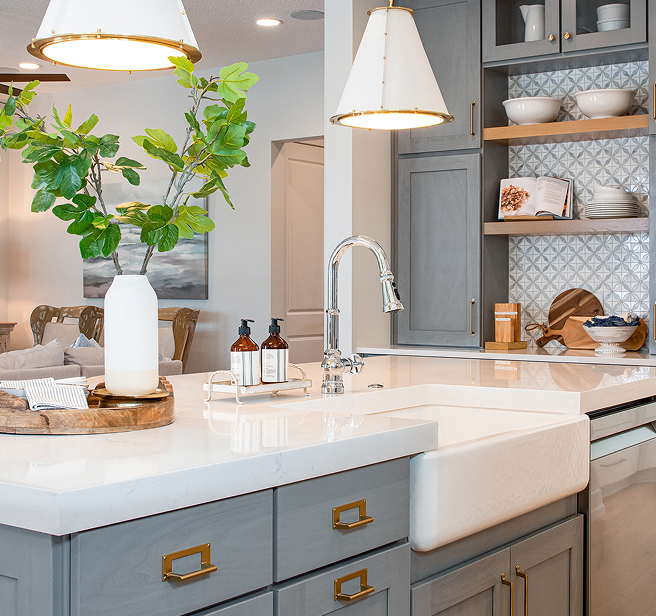
A Homeowner's Guide To Choosing Kitchen Cabinets
New cabinets are usually the largest single investment in a kitchen, and they are also the first thing anyone notices when they walk into the room. That combination is what makes pricing feel so confusing. One quote sounds reasonable, the next one is nearly double, and it is hard to know what a fair price actually looks like. We are going to break down exactly what kitchen cabinets cost in 2026, what drives the price up or down, and how to plan a budget that balances upfront cost with cabinets you will be happy with for years.
Cabinets do more than hold dishes and store the everyday clutter of a working kitchen. They set the style of the entire room and carry the daily wear of cooking, cleaning, and constant use, so the smart decision here is about long-term quality and fit rather than the lowest sticker price.
A Homeowner's Guide To Choosing Kitchen Cabinets
New cabinets are usually the largest single investment in a kitchen, and they are also the first thing anyone notices when they walk into the room. That combination is what makes pricing feel so confusing. One quote sounds reasonable, the next one is nearly double, and it is hard to know what a fair price actually looks like. We are going to break down exactly what kitchen cabinets cost in 2026, what drives the price up or down, and how to plan a budget that balances upfront cost with cabinets you will be happy with for years.
Cabinets do more than hold dishes and store the everyday clutter of a working kitchen. They set the style of the entire room and carry the daily wear of cooking, cleaning, and constant use, so the smart decision here is about long-term quality and fit rather than the lowest sticker price.
WHAT DETERMINES THE COST OF KITCHEN CABINETS
Cabinets do more than hold dishes and store the everyday clutter of a working kitchen. They set the style of the entire room and carry the daily wear of cooking, cleaning, and constant use, so the smart decision here is about long-term quality and fit rather than the lowest sticker price.
WHAT DETERMINES THE COST OF KITCHEN CABINETS
Cabinets do more than hold dishes and store the everyday clutter of a working kitchen. They set the style of the entire room and carry the daily wear of cooking, cleaning, and constant use, so the smart decision here is about long-term quality and fit rather than the lowest sticker price.
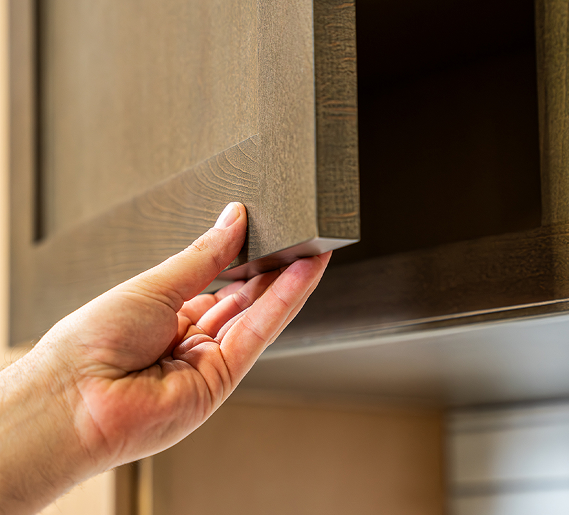
final price is built from several independent choices
No two cabinet projects cost exactly the same, because the final price is built from several independent choices. Once you understand these variables, a quote becomes much easier to read, and you can see where it makes sense to spend and where you can save without giving up quality.
- Construction level – stock, semi-custom, and custom cabinets sit at very different price points.
- Box material – plywood boxes cost more than particleboard but hold up far better in a working kitchen.
- Door style and material – a simple slab door costs less than a detailed raised-panel or glass-front door.
- Finish and color – standard finishes are the most affordable, while custom paints and glazes add to the total.
- Hardware and features – soft-close hinges, full-extension drawers, and built-in organizers all raise the price.
- Kitchen size and layout – more linear feet of cabinetry and awkward corners both push the number higher.
- Brand and warranty – value-driven lines cost far less than national premium brands for comparable quality.
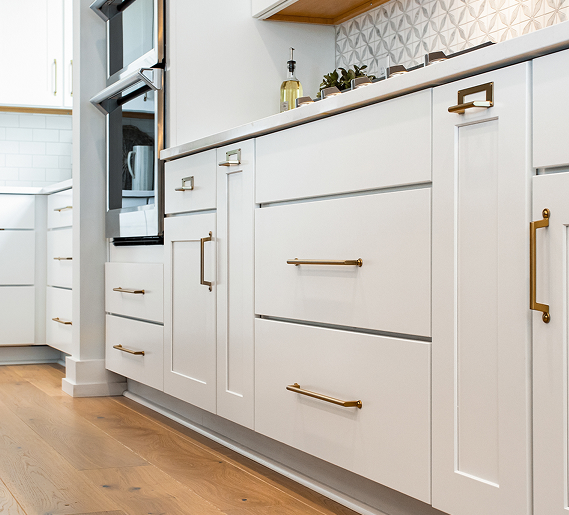
final price is built from several independent choices
No two cabinet projects cost exactly the same, because the final price is built from several independent choices. Once you understand these variables, a quote becomes much easier to read, and you can see where it makes sense to spend and where you can save without giving up quality.
- Construction level – stock, semi-custom, and custom cabinets sit at very different price points.
- Box material – plywood boxes cost more than particleboard but hold up far better in a working kitchen.
- Door style and material – a simple slab door costs less than a detailed raised-panel or glass-front door.
- Finish and color – standard finishes are the most affordable, while custom paints and glazes add to the total.
- Hardware and features – soft-close hinges, full-extension drawers, and built-in organizers all raise the price.
- Kitchen size and layout – more linear feet of cabinetry and awkward corners both push the number higher.
- Brand and warranty – value-driven lines cost far less than national premium brands for comparable quality.
AVERAGE KITCHEN CABINET COSTS IN 2026
Most kitchen cabinet projects in 2026 fall somewhere between $4,000 and $30,000 installed, and the range is wide because it covers everything from a small stock refresh to a large custom kitchen. Cabinets are usually priced by the linear foot, which is the measurement along the wall that the cabinets cover. The table below shows typical installed costs per linear foot by construction level.
| Cabinet Type | Typical Installed Cost | BEST FOR |
|---|---|---|
| Stock | $100 – $300 | Budget-conscious projects, standard sizes and layouts |
| Semi-custom | $150 – $650 | Most homeowners who want more sizes and finishes |
| Custom | $500 – $1,200+ | Fully tailored kitchens and unusual layouts |
These are typical market ranges, and your final number depends on the size of your kitchen along with the choices covered below. At The Window Depot, Royal Shaker cabinets are a popular value choice for kitchen projects, with clean lines, soft-close doors, and a price that leaves room in the budget for the rest of the remodel. For bathrooms and powder rooms, our Royal Cabinets Vanity Combos pair a coordinated cabinet and top in one ready-to-install package.
COST BY CABINET TYPE: STOCK, SEMI-CUSTOM, AND CUSTOM
The construction level is usually the first decision that shapes your budget. The Window Depot carries options across all three categories, from ready-to-go stock lines to fully custom orders through brands like Anaheim Kitchen & Bath, Bridgewood, Muses, and Continental Cabinets.
COST BY CABINET TYPE: STOCK, SEMI-CUSTOM, AND CUSTOME
The construction level is usually the first decision that shapes your budget. The Window Depot carries options across all three categories, from ready-to-go stock lines to fully custom orders through brands like Anaheim Kitchen & Bath, Bridgewood, Muses, and Continental Cabinets.
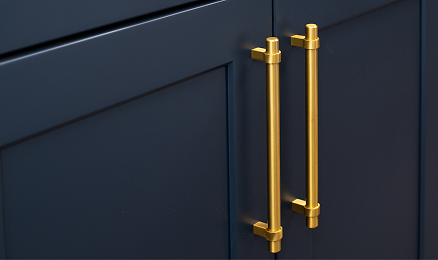
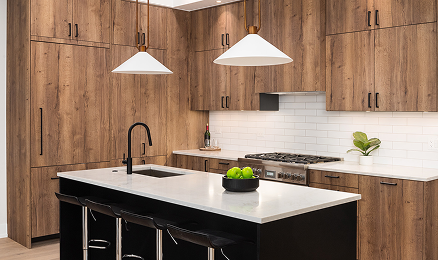
Semi-Custom
Semi-custom cabinets start from standard sizes but give you more choice in dimensions, door styles, and finishes. This is the middle ground most homeowners land on, because it balances personalization against a reasonable price.
- Typical range: $150 to $650 per linear foot installed
- More finish and size options than stock
- A good fit for kitchens that need a few adjustments to work well
Semi-Custom
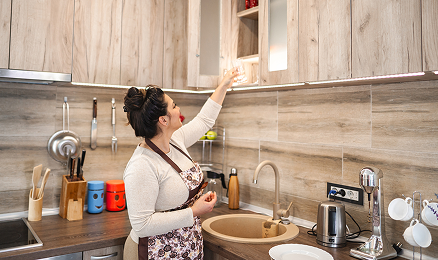
Semi-custom cabinets start from standard sizes but give you more choice in dimensions, door styles, and finishes. This is the middle ground most homeowners land on, because it balances personalization against a reasonable price.
- Typical range: $150 to $650 per linear foot installed
- More finish and size options than stock
- A good fit for kitchens that need a few adjustments to work well
Custom
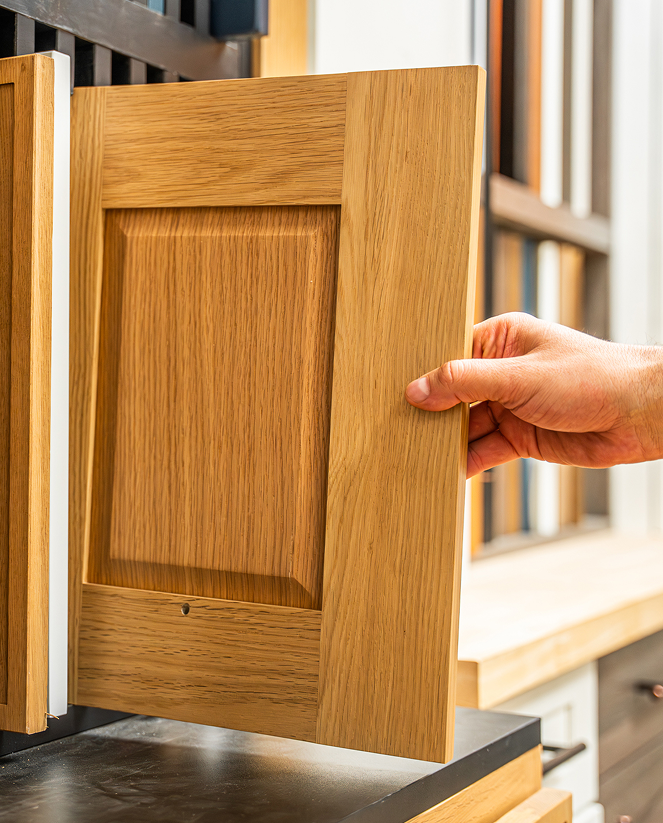
Custom cabinets are built to your exact specifications, which makes them ideal for unusual layouts, specific storage needs, or a particular design vision. They carry the highest price and the longest lead time, but nothing else matches a space as precisely.
- Typical range: $500 to $1,200+ per linear foot installed
- Built to fit your kitchen down to the inch
- Best for distinctive layouts and higher-end finishes
HOW CABINET MATERIALS AFFECT PRICE AND DURABILITY
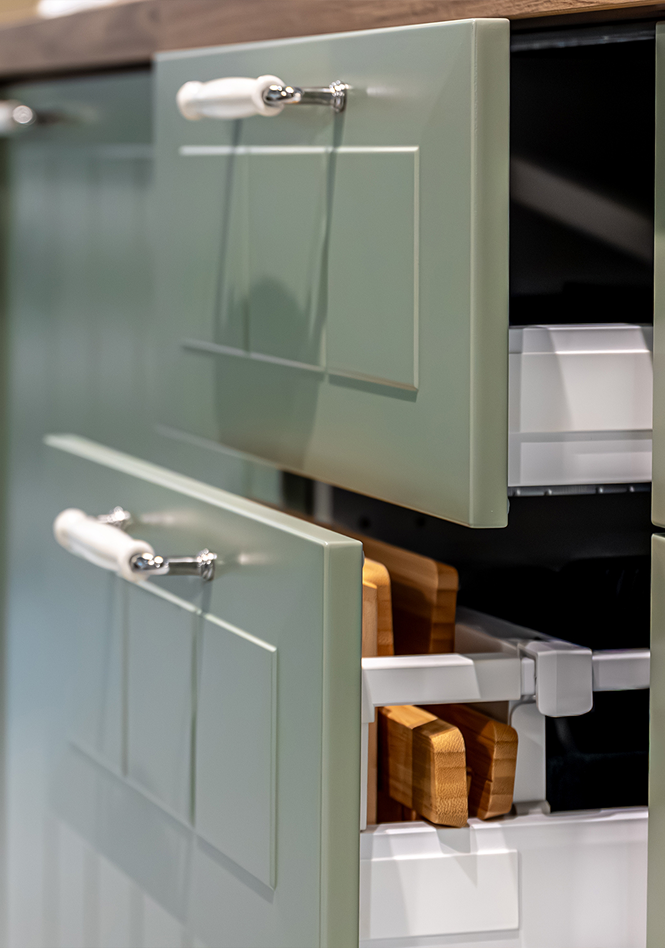
The material behind the finish has a bigger effect on how long cabinets last than most people expect, and it is one of the clearest places where a lower price can end up costing you later.
- Plywood boxes – stronger and more moisture-resistant, the better choice for a working kitchen
- Particleboard or MDF boxes – lower cost and fine for light use, but less tolerant of water
- Solid wood doors – durable and easy to refinish, with natural grain variation
- MDF doors – smooth and stable for painted finishes, less prone to cracking than wood
- Thermofoil doors – a vinyl layer over MDF, budget-friendly and easy to wipe clean
Tip from The Window Depot: In a kitchen that gets daily use, a plywood cabinet box is worth the small added cost. It holds screws and hardware more securely and stands up to spills and humidity far better than particleboard over the long run.
HOW DOOR STYLE AND FINISH CHANGE THE PRICE
The door is the part of the cabinet you see and touch every day, so the style sets the look of the whole kitchen while also affecting the price. Simpler doors cost less to make, and detailed profiles or specialty finishes add to the total.
- Slab (flat) doors – clean and modern, the most affordable style
- Shaker doors – a simple framed panel that suits almost any kitchen, moderate cost
- Raised-panel doors – a traditional, detailed look at a higher price
- Glass-front doors – used as accents for display, priced per door
- Specialty finishes such as custom paint or glaze – the highest cost, fully personalized
Not sure which finish fits your kitchen? Our team offers free in-house design help to match your cabinets to your counters, flooring, and overall style.
CABINET HARDWARE AND FEATURES
Hardware and built-in features are easy to overlook when you are comparing quotes, but they shape both the daily experience and price.
- Soft-close hinges and drawer slides – quieter and gentler on the cabinets, now a popular standard
- Full-extension drawer slides – let you reach all the way to the back of every drawer
- Pull-out organizers, lazy Susans, and trash cabinets – add storage and everyday convenience
- Knobs and pulls – a small change that refreshes the look, available in finishes like satin nickel, matte black, bronze, and stainless steel
The Window Depot stocks cabinet hardware alongside the cabinets themselves, so you can coordinate your hinges, slides, and pulls in one trip.
CABINET HARDWARE AND FEATURES
Hardware and built-in features are easy to overlook when you are comparing quotes, but they shape both the daily experience and price.
- Soft-close hinges and drawer slides – quieter and gentler on the cabinets, now a popular standard
- Full-extension drawer slides – let you reach all the way to the back of every drawer
- Pull-out organizers, lazy Susans, and trash cabinets – add storage and everyday convenience
- Knobs and pulls – a small change that refreshes the look, available in finishes like satin nickel, matte black, bronze, and stainless steel
The Window Depot stocks cabinet hardware alongside the cabinets themselves, so you can coordinate your hinges, slides, and pulls in one trip.
INSTALLATION AND LABOR COSTS
Installation is what protects the entire investment, because even excellent cabinets will not perform well if they are not level and securely mounted. Labor is a meaningful part of the total, and it varies with the condition of the kitchen and the complexity of the layout. Older kitchens often need extra labor to correct uneven walls and floors, which is why two homes with identical cabinets can still see different final quotes.
Removing and disposing of the old cabinets
Wall condition and whether the boxes need shimming to sit level
Plumbing or electrical that has to be worked around
Custom modifications such as fillers, end panels, and crown moulding
BUDGETING FOR A FULL KITCHEN VS. A REFRESH
Not every kitchen needs all-new cabinets. The right budget depends on whether you are reworking the entire layout or simply updating what is already there.
- Full replacement gives you new layout, materials, and finishes throughout, and it delivers the most dramatic change.
- A partial update, such as new doors or a fresh island, can refresh the look for much less.
- Replacing everything at once usually gives the most consistent result, while a phased approach lets you spread the cost over time.
A good rule of thumb is to keep your kitchen budget in line with your home's overall value. Our guide to the 30% rule in renovations explains how to set a number that makes sense for your home.
INSTALLATION AND LABOR COSTS
Installation is what protects the entire investment, because even excellent cabinets will not perform well if they are not level and securely mounted. Labor is a meaningful part of the total, and it varies with the condition of the kitchen and the complexity of the layout. Older kitchens often need extra labor to correct uneven walls and floors, which is why two homes with identical cabinets can still see different final quotes.
Removing and disposing of the old cabinets
Wall condition and whether the boxes need shimming to sit level
Plumbing or electrical that has to be worked around
Custom modifications such as fillers, end panels, and crown moulding
BUDGETING FOR A FULL KITCHEN VS. A REFRESH
Not every kitchen needs all-new cabinets. The right budget depends on whether you are reworking the entire layout or simply updating what is already there.
- Full replacement gives you new layout, materials, and finishes throughout, and it delivers the most dramatic change.
- A partial update, such as new doors or a fresh island, can refresh the look for much less.
- Replacing everything at once usually gives the most consistent result, while a phased approach lets you spread the cost over time.
A good rule of thumb is to keep your kitchen budget in line with your home's overall value. Our guide to the 30% rule in renovations explains how to set a number that makes sense for your home.
REFACE VS. REPLACE: WHICH IS MORE COST-EFFECTIVE?
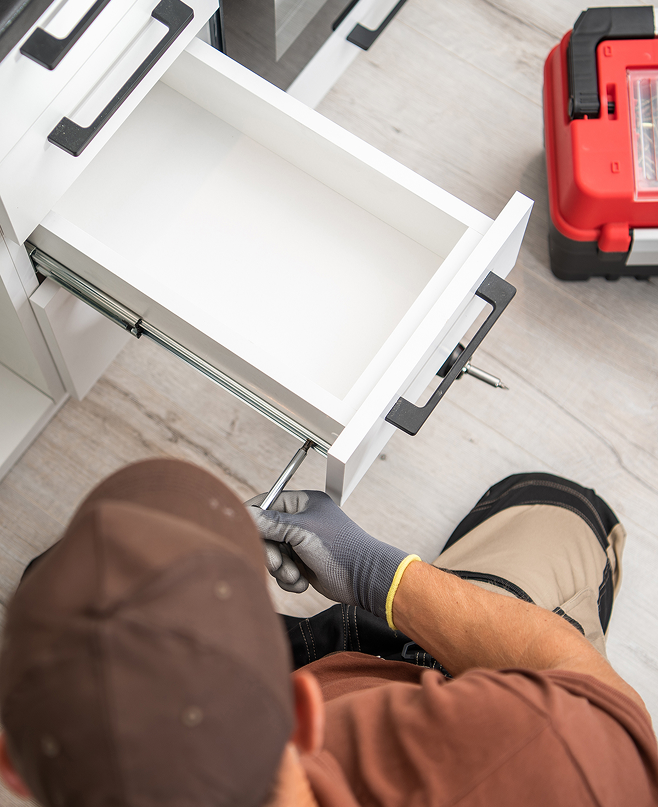
If your current cabinet boxes are still solid, refacing can be a smart way to update the look for less. But once the boxes themselves are worn or the layout no longer works, full replacement is usually the better value.
Replacement is generally the better choice when you notice:
- Water damage, swelling, or soft spots in the boxes
- A layout that wastes space or no longer fits how you cook
- Doors and drawers that no longer close or line up properly
- A style so dated that refacing alone will not modernize the room
- Refacing can work well when the boxes are sound and you mainly want a new color or door style.
THE LONG-TERM VALUE: ROI AND RESALE
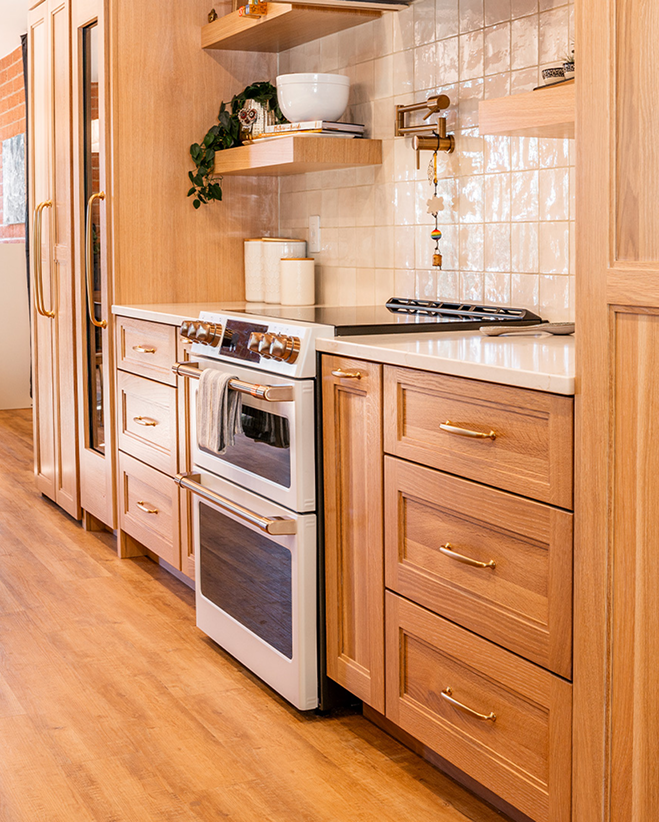
A kitchen update is consistently one of the strongest home improvements for return on investment, and cabinets are the centerpiece of that update. Even if they do not return their full cost the day they go in, the value shows up in daily use and again at resale.
- A more functional kitchen with better storage
- A fresher, more current look that appeals to buyers
- Improved organization that makes the space easier to live in
- A stronger first impression during a home showing
Quality cabinets can last 20 years or more, so the upfront cost is spread across many years of daily use.
FREQUENTLY ASKED QUESTIONS ABOUT KITCHEN CABINETS
1. How much do new kitchen cabinets cost?
Most kitchen cabinet projects in 2026 run between about $4,000 and $30,000 installed, depending on the construction level, materials, and the size of the kitchen. Stock cabinets sit at the lower end, while fully custom cabinets reach the top of the range.
2. What is the difference between stock, semi-custom, and custom cabinets?
Stock cabinets come in set sizes and finishes and cost the least. Semi-custom cabinets add more size and finish options for a moderate increase. Custom cabinets are built to your exact specifications and carry the highest price along with the longest lead time.
3. What is the most durable material for kitchen cabinets?
For the cabinet box, plywood is the most durable choice and handles moisture better than particleboard. For doors, solid wood and MDF both perform well, with MDF being especially stable for painted finishes
4. Are shaker cabinets still in style?
Yes. Shaker doors have a simple framed-panel design that works in both traditional and modern kitchens, which is a big part of why they stay one of the most popular styles year after year.
5. Is it cheaper to reface or replace cabinets?
Refacing usually costs less and works well when the existing boxes are still solid. Replacement is the better value when the boxes are damaged, the layout no longer works, or you want a different configuration
6. How long do kitchen cabinets last?
Quality cabinets typically last 20 years or more with normal use and care. Box material, door construction, and everyday wear all affect how long they hold up.
7. Do new cabinets add value to a home?
Yes. Updated cabinets improve both the look and the function of the kitchen, and kitchens are one of the spaces buyers pay the most attention to, so they support resale value.
PLAN YOUR KITCHEN CABINET PROJECT WITH THE WINDOW DEPOT
Choosing cabinets comes down to the decisions you make about construction, material, door style, and features. The Window Depot helps homeowners across Arizona, Texas, New Mexico, and California find quality cabinets at honest, value-driven prices, with free in-house design help to bring the whole kitchen together. Ready to start planning? Contact us to speak with a knowledgeable team member, or explore more homeowner resources in our Guide Center.
PLAN YOUR KITCHEN CABINET PROJECT WITH THE WINDOW DEPOT
Choosing cabinets comes down to the decisions you make about construction, material, door style, and features. The Window Depot helps homeowners across Arizona, Texas, New Mexico, and California find quality cabinets at honest, value-driven prices, with free in-house design help to bring the whole kitchen together. Ready to start planning? Contact us to speak with a knowledgeable team member, or explore more homeowner resources in our Guide Center.









How Can We Help?
COMPARE ITEMS
Quick View
{{product.item_name}}
Select Item For Bundle
{{attribute.value}}
{{attribute.value}}
{{{product.item_description}}}
- {{selling_point}}
| Location | Stock | |
|---|---|---|
| {{location.warehouse}} | {{location.quantity}} |
{{product.item_name}}
{{{product.item_description}}}
{{attribute.value}}
{{attribute.value}}
{{{product.item_description}}}
- {{selling_point}}
Configure your product
{{product.item_name}}
{{{ product.item_description }}}
Item Code: {{product.item_sku || ''}}